

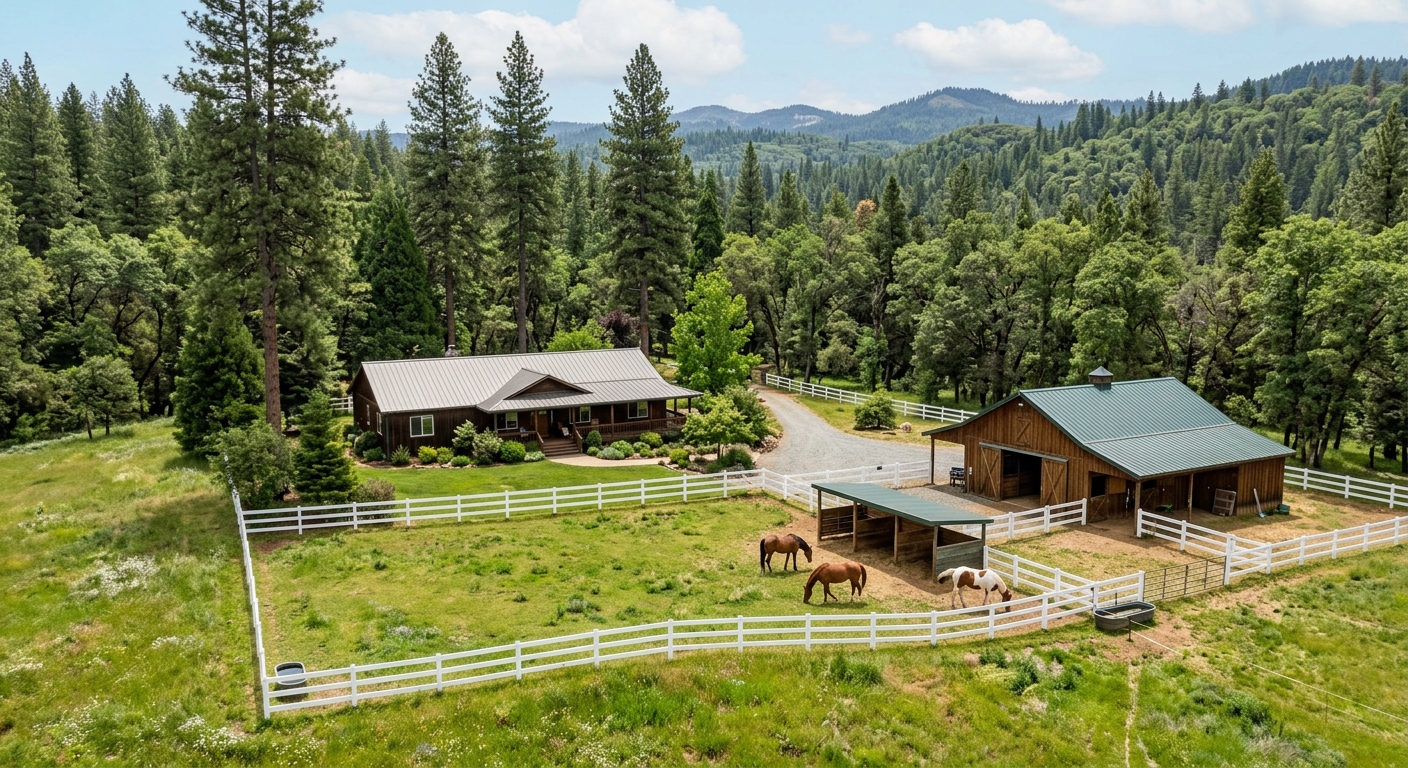
This is a story about a very specific family that is just like so many families here in the rural Sierra Foothills. It's about their place. It's about their lifestyle. It's about their transition into life's next chapter...
There was a time when that place was the busiest little piece of country you could imagine.
The days started early. There were horses to feed, chickens to let out, and show animals that needed tending before the school bus ever arrived. The barn was full of life, the fences were straight, the pastures were green in the spring, and there was always something that needed fixing. There were weeds to spray, stalls to clean, pens to muck, and always another project waiting just around the corner. But nobody minded. Not back then. Mom and Dad had built a wonderful life on those acres. They raised their kids with dirt under their fingernails, responsibility in their hearts, and the kind of work ethic you can't learn from a textbook.
The kids grew up in 4-H and FFA. They raised show steers, brushed show hogs, and fussed over their chickens before the county fair. There were long nights getting animals ready, early mornings loading trailers, and proud parents sitting in folding chairs, watching their kids do their best. There were ballgames, too. Baseball, softball, football, and all the other things that filled up a family's calendar. The old pickup made countless trips back and forth, and the kitchen table was the place where everyone gathered to talk about the day's adventures.
And then there was the pond.
On hot summer afternoons, it became a gathering point for the neighborhood. The neighbor kids would come over to fish, swim, and cool off. Sometimes the horses would be caught and brushed and ridden out to the spring-fed water to swim the horses bareback. It was a functional piece of land that doubled as a backdrop for a vibrant childhood.
Those years demonstrated the true value of rural living. It was a secure environment where kids learned autonomy, neighbors operated on mutual trust, and a hard day's work yielded real satisfaction.
Those were the days when the property seemed almost magical. It was a place where children could roam, where neighbors were helping hands and friends, where supper tasted better after a long day's work, and where the memories seemed to make themselves.
Years passed, just as they always do. The kids graduated, went off to college and careers, married good people, and started families of their own. Mom and Dad couldn't have been prouder. They had done what all parents hope to do. They had raised good kids who were ready to make their own way in the world.
The phone calls and visits continued, but life got busy. There were jobs, school schedules, children's activities, and miles between them. The kids had their own homes to maintain and their own responsibilities to manage. The visits back home to work and play for the weekend got fewer and fewer.
Meanwhile, Mom and Dad kept living on the place they loved. At first, everything was fine. They would mow the pastures, keep up the fencing, clean the barn, and tackle those weekend projects. The horses were around for years. hadn't been saddled for years. If something broke, they fixed it. If the weeds got ahead of them, they caught up the following weekend.
But little by little, things changed. The old tractor became harder to climb up onto. A day of digging postholes left them sore for three days. The barn had become a catch-all and needed cleaning, the blackberry bushes crept farther into the pasture, and the paint on the shop began to peel. There were lots of little things that needed attention, but somehow there was always something more important, a grandchild's school play or big game or recital, a friend's birthday—and on the days they were home, somehow they just didn't have the energy to get started.
When friends stopped by, they felt a bit embarrassed about the condition of the place. They remembered when everything was tidy, when the equipment was cleaned up and put away, and when the property reflected the pride they had always taken in it. They hadn't gotten lazy. They weren't careless. They were simply in a different time of life, and the property that had once given them so much joy had gradually become more than they had time and energy to comfortably manage.
Still, the thought of leaving was almost unbearable. How could they leave the place where their children had grown up? How could they let go of the barn, the pond, the old oak trees, the neighbors that had become like family, and the memories around every corner?
And how could they possibly get everything ready to sell when they could barely keep up with the work that needed doing?
So they waited another year.
Then another.
Maybe next spring, they told themselves. Maybe after they fix that fence corner out by the road. Maybe after they clean out the shop. Maybe when they finally have the energy to get everything looking right again.
Here's something I wish more families understood: You don't have to get the whole place ready before you ask for help.
You don't have to apologize for the barn that needs cleaning, the weeds that got away from you, or the projects that never got finished.
You don't have to make your property look perfect before you invite someone over to talk about your future.
Sometimes the hardest part of making a move isn't selling the property. It's admitting that you may be ready for a different way of living.
That's where I'd like to help.
I'm Forth Hoyt with Cool Land and Homes by Keller Williams, and rural life isn't something I've learned from a real estate course or picked up by looking at property listings. I've lived it for 61 years.
I was raised on big ranches in Northern California and southeastern Oregon. I've spent my life alongside family, working the land and learning what it really takes to keep a rural property going. I know about wells, septic systems, pressure tanks, and irrigation systems. I know irrigation districts and the importance of getting water where it needs to go. I can look at a driveway and spot where it floods during hard rains, spot the weak section of fence where the neighbors cows get in and tell you when an oak tree is about to split apart.
I know that country properties come with their own challenges. Every place is different. A barn isn't just a building, a pasture isn't just a patch of grass, and a water system isn't something you can always understand by looking at it from the driveway. There's a lifetime of knowledge and work behind the way these places function. And I understand the pride that comes with caring for your land.
That's why I enjoy helping people prepare their properties for their next chapter. I like cleaning things up, improving landscaping, painting, tidying up outbuildings, and I have connections. I know the roofer, and the well guy, and the carpet cleaner and the families with big strong teenage boys that want to work. And I like helping owners figure out where to begin.
I have the energy to get involved, and I know how much a little practical help can mean when a property needs some TLC.
If you can relate to the story of this family and feel like you want to start putting a plan together for your next chapter, I would sure like to help. We can walk your land together, talk about your goals, and put together a sensible plan. We'll identify what deserves attention, what improvements will definitely make a difference, and what doesn't need to be done at all. We'll take it one step at a time, without making you feel stressed out.
You spent a lifetime taking care of your family and your land. Now it's okay to let somebody help you get it ready for your next chapter.
If the time has come to trade the acreage, the barns, and the endless weekend chores for a home that's easier to manage, that doesn't mean you're giving up the life you built.
It means you're carrying that life forward into a new chapter.
The memories will come with you. And the place where your children grew up will always be part of your family's story.
When you're ready, let's talk.
There's no pressure, no judgment, and no need to have everything figured out. We'll start right where you are.